Recollections: Halloween

The first play I wrote was entitled “The Witch of Belon” and was a Halloween spectacular. I was eight. I either cajoled or guilt-tripped my mother to take it by dictation on her Royal portable typewriter, or a handwritten script was deemed to be unprofessional. However it was that August evenings were spent on the front porch as I acted out my masterpiece, rewrote, and corrected, my mother typing away at top speed and insisting that I stop talking when a new page needed to be wound into the patten, we spent a couple of weeks doing it.

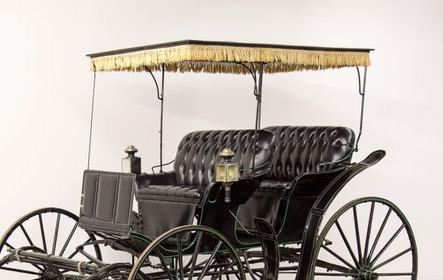
The year before that, I announced at some point in September that I wanted to stage a play in our garage for Halloween. That spring my mother had taken me and my Aunt Mary to a production of Oklahoma! at San Jose State Teachers’ College, and it made quite an impression on me. I can distinctly remember climbing the steps to the theatre door with a six-year-old’s sensation of going to meet my destiny. I recall scenery, light cues, costumes, choreography, individual performances, and the surrey (with fringe on the top) they brought out for curtain call. All those elements were familiar to me, even though I had names for none of them. So, a few months later I decided to enter show biz. By Halloween I would be seven, and with that came responsibilities.

My mother suggested we go to the Sunnyvale library and inquire about children’s plays.

“Has to have a Halloween theme.”

“Why Halloween?”

“Because that’s when we’ll put it on.”

“What about trick or treat?”

“Before. Soon as it turns dark, we’ll do the play – so we can do lighting – then everybody can go trick or treat. It’s dark early by the end of October, isn’t it?”

She explained to the librarian what it was we were looking for, and amazingly she had an entire volume of children’s plays for Halloween. They were sensibly written to be narrative mime shows, so the burden of verbal delivery would be carried by an adult reading text, or at the very least, an older child. I was skeptical, but my mother looked so relieved and the librarian was so pleased at having addressed our need so sublimely that I kept my reservations to myself.

We had a two-car garage with sliding doors. This is an insignificant detail at this point in the story, but remember it. 

I cast the six or eight roles from among my second grade classmates. My mother and another stage mother read the narrative parts, and the rest of us did our best to express the action physically. I’d rehearsed the other actors on the weekend prior. I remember nothing of the story except that I played a ghost costumed in too tight a sheet, and neither was I happy with my props. The performance garnered an enthusiastic response from our audience, and the curtain call – though it lacked anything so wonderful as a surrey – was thrillingly memorable.

So, as school let out on second grade and we settled into summer rhythms, my friends began to ask if there were going to be another play for third-grade Halloween. I pretended not to have given the idea any thought. In reality, I’d been imagining the next project to myself for weeks as I tried to fall asleep. So, in July I managed to manipulate a conversation with my mother into her asking what plans I had for Halloween.

“Well, I think instead of inviting just a few kids and their parents, we should invite the whole third grade.”

“And their families?”

“Of course.”

“That’s a lot of people. How will we fit them into half the garage?”

“We don’t have to. We’ll seat them in the driveway facing the garage.”

“On what?”

“We’ll borrow benches from catechism.”

“We will, will we?”

“Okay, I’ll ask. And we should have refreshments for before the show.”

“And where do we get those?”

“Somebody can organize the other mothers.”

“Somebody?”

“Not you! Like Bobby’s mom. She’s nice and I bet she’s good at that.”

“Okay, so we need a play…”

“Obviously.”

“We’ll go to the library next week and…”

“No, I didn’t like that play that much, and I read most of them in that book, and that was the best one, so, I’ve been thinking…”

And such was the road that led to evenings in August on the front porch while my mother typed and typed and I talked and talked. I cast the play as we worked. Connie was a natural comic, and I liked her a lot, so she would play the title role because someone with good comic ability would bring out more nuance in the character. And Jeff would play the prince because he was my best friend and had that sort of heroic bearing you’d expect from a prince.

I understood that the garage gave us a technical advantage if viewed from the driveway, that is both doors could be drawn to one side, and while one scene was being acted, a change of scenery for another could be happening on the closed half. Then stage hands would draw the doors to close the first scene and astonish the audience with a different location. I drew my inspiration from a visit to City of Paris department store in San Francisco where I experienced my first elevator. We went into a box, we said something to the nice lady in the corner, waited awhile, and when the doors opened someone had completely changed everything; furniture, goods for sale, people… it was amazing! Two or three years later I was going for the same effect with the family garage.

I don’t know how many years the Halloween plays continued, I do know there was a fourth grade play called something like “The Witch of Belon Returns”. After that, all I remember is playing the king in one of the later opuses and improvising liberally on my own script. From the bottom of my heart, I thank my parents for putting up with thirty-five classmates, their siblings and parents, most in costume, running through the yard and house, while I ordered kids around in auteur director fashion.

What perplexes me is why after college I chose to doubt that theatre was all I’d ever wanted to do. To paraphrase from The Music Man, I became a dewy young guy who keeps resisting all the while he keeps insisting. 

“So, how do you think it went? Did the kids like it?”

“There are problems with act two. Would you consider helping me type the rewrites?”

The scripts are actually filed away somewhere, I discovered them among my mother’s things. I didn’t have the courage to read them. 

Happy New Year Everyone!

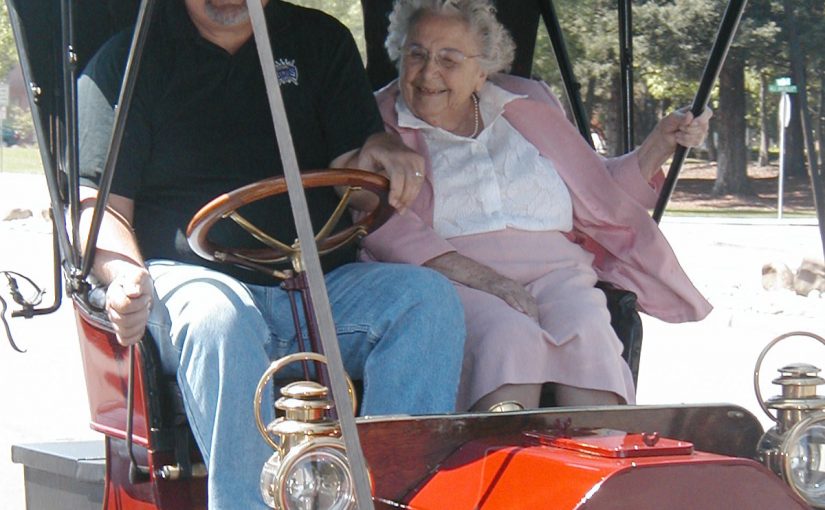
Photo: the surrey that I couldn’t work into the show.
Recollections: Nick Lopin Sr.

Nick Lopin was drafted and served in the imperial Austrian army for 18 months around 1901. When he finished his stint, he received orders to re-up, and that prompted him to move to America. I have no idea what legal stunts such a thing must have involved, but he evaded a second draft and successfully escaped to New York. But something of his military service must have stuck. His five children called him The General.

As family lore has it, in New York, he went to work for the gas company. So, during my first few weeks as a New Yorker, I frequented the history room at the Astor-Lenox Library to see what I could discover. Yes, I found employment records for the gas company during the years my grandfather worked there, and yes his name was listed. It also gave an address. It turns out that he lived about a block away from where I eventually settled for the next 15 years, but in a building no longer extant. Still, it was mind-bending to consider that passing the row of brownstones that comprised most of the side of West 49th Street that I lived on was a part of his daily routine. It made me wonder what thoughts he may have had looking at the building I was to move into eighty-five years later.

That area of Manhattan was, and still is — to whatever extent ethnic neighborhoods are now possible — the Croatian quarter. There is an imposing Catholic church in the area with a Croatian coat of arms above its door. Some of the older mom and pop stores are owned and operated by people with names like Stanitch and Verkitch. I moved there because it was a good situation that I could afford, and had no idea I was moving into a part of town established by my countrymen, much less a neighborhood I had in common with my maternal grandfather.

I didn’t know Grandpa Lopin well, he died when I was six. What I do know of him came through stories told by his children. 

Nick, the General, had preordained opinions as to how children should behave, as to how a woman should comport herself, and about a man’s position in society. For instance, he absolutely forbade his wife or daughters to wear even a hint of makeup. That wasn’t severe for that time and place. The wearing of makeup was a city fashion, and unusual even there. But my mother’s young life was full of pronouncements; makeup would not be tolerated in his house, a woman’s crown is her (long) hair, her clothes should reveal nothing of her shape. 

In second grade, my mother was cast in the school play. She was thrilled, thoroughly enjoyed rehearsals, and looked forward to performance. All the students’ families were invited, of course, and although stage makeup had been referred to prior to performance, she didn’t expect her father to attend so it caused no alarms. Make up was applied, the play began, she peaked through a curtain, and there in the second row was her father. Panic. She couldn’t go on with make up! He would stop the show and embarrass her! So, she locked herself in the bathroom. 

Her entrance cue came. No Annie Lopin. The teacher read her lines to keep the scene going, then in a panic herself, searched for her wayward actress. She suspected the bathroom when she tried the door. She knocked. Annie whimpered. Furious whispers ensued. At intermission, Mr. Lopin was summoned. He spoke almost no English. The teacher managed to get him to the bathroom door where his eldest child was hiding, and in Croatian he discovered why she had missed her scene.

“An actor has to wear makeup, it’s alright in this case,” he told her.

Annie cracked the door, Nick took her hand and led her home. She’d only that scene in the first act, so her second grade theatrical career ended there.

When, a few years later, Annie bobbed her hair, however, there was the devil to pay. Nick was in a fury for a week. But years passed, Ann went to beauty school and received her license as a hairdresser, and opened shop with a thirty-five dollar loan from her father, despite the fact that she was applying makeup and shortening hair from 10 to 6 every day. And opening her own business.

The General learned from fatherhood. By the time I knew him, he was a quiet, gentle soul. I was never quite able to put his reportedly fiery temper together with the man I knew. 

In Zuljana, at least, it was common for children to drink a splash of wine in a glass of water with meals. I tried drinking straight water my first lunch there. Everyone objected. When I insisted, they looked bemused in a horrified sort of way. When I spend most of the rest of the day frequenting the outhouse, I began to understand. The water in many of the coastal towns is not particularly kind to the intestinal tract; the wine kills the bacteria.

But preferences developed around this necessity. Growing up in Sunnyvale, our Croatian neighbors – especially the older ones – always cut their wine with water, usually half and half. It was considered odd, or perhaps profligate, to drink wine uncut.

At the age of about ten, most parents thought it wise to begin to gradually increase the wine content of a child’s glass so they would become accustomed to something more than dollop enough to kill bacteria. At so it was that in fourth grade, Annie began bringing a small bottle with lunch filled with a red liquid that resembled a light wine. It also happened to be the year that prohibition had been ratified. When her teacher saw Annie happily uncork her wine and drink it with her sandwich, she was a little at a loss as to what to do. So, the first day it was ignored. The second, the teacher inquired about the bottle’s contents.

“It’s my pop’s wine,” she said simply.

Mr. Lopin was summoned. His English had not improved in the couple of years that had passed since the makeup debacle. Nor had his understanding of American society. The notion of prohibiting alcohol, if it ever entered into the conversations he had with neighbors or countrymen, would have sounded absurd to one who kept three barrels in his basement. Annie was able to explain to him the teacher’s concerns, and translated for her his response.

“There’s nothing wrong or unusual about it! Where else is a child going to learn the proper way of enjoying alcohol if not under the guidance of her parents? And her teachers?”

The teacher made it clear that further bottles of wine brought to school would be confiscated and replaced with a glass of good drinking water. One wonders if confiscation ever occurred, and what the teacher did with the wine if it did.

As far as I know, Nick kept making wine right through prohibition. His family had been doing it for millennia. 

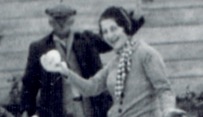
Photo: the only image I have of my grandfather Lopin, stolen from the snow picture of 1932. My aunt Mary is in the foreground.

Recollections: Irma Zarko

Irma Zarko’s house had a cellar. In that cellar was always a barrel of wine. Fresh wine in the fall, heady wine by summer. The aroma of it competed with the garlic, but was victorious only in the cellar. One of childhood’s great adventures was being sent down with an empty bottle to funnel that red wine straight from the tap. Hers was a working cellar; low, irregular, musty with cobwebs, filled with sacks of potatoes and onions, jars of fruit and tomatoes, braids of garlic, bags of freshly dried herbs, goat meat, dried tomato paste in ceramic crocks. To be sent to the cellar was to enter another world. My cousins and I relished going down to fetch supplies. I still dream about it.

Irma Zarko’s yard had a hen house. Quite often we’d be invited to gather eggs. We weren’t sent alone on these forays, but we could carry the basket, touch the warm shells, commune with the hens.

Irma Zarko’s garden had two plots, both quite large. One, next to the barn, was mainly for kale. Kale and lentils, with sausage for Sundays and holidays, is what got her young family through the winters, and even as prosperity nudged aside the need to cleave to that diet, it continued from force of habit. The other garden was behind the house and was everything else that could be grown in that climate, which is to say, everything.

Irma had goats, too, but gave them up when I was still too young to form opinions about them.

After their one-minute courtship in Dubrovnik, Irma had done as Vito suggested. He bought passage for her in about two months’ time. That allowed him to return to California, put some money together, send it to her (by wire? Must have been.), and ready his house for a new wife. She traveled alone from Dubrovnik to Naples, Naples to Liverpool, Liverpool to Ellis Island. She stayed in New York for a few days with friends, in the Croatian neighborhood west of Hell’s Kitchen; the same area I called home for sixteen years. Then she caught a train across the continent to Oakland, and changed to Sunnyvale where Vito met her with a buggy. It was her first journey longer than the two hundred kilometers that lay between her island home in Brac and her laundry job in Dubrovnik.

She was nineteen, spoke fluent Italian and got by in Portuguese. Years in California added Spanish and English to the category of getting by. Because her favorite market was owned by Asians, she even picked up a few words of Chinese, just to be friendly.

When Vito died in 1935, Irma put on widow’s weeds, and never again wore color in public. She had a black straw hat decorated with flowers of such a dark blue that they, too, seemed black. She allowed a mild exception to the rule of black with her aprons (impossible to find a store-bought apron in solid black) and a few house dresses. For those, she was able to find fabric with black backgrounds dotted all over with small patterns in drab colors. But most of the time, she was solid black, all the way. Her hatpin was decorated with a black fake pearl. She carried a black shopping bag. And the older she became, the blacker her attire.

On Irma’s dresser stood six or eight pressed glass perfume bottles with great fan-shaped stoppers. All the bottles were empty, and I was fascinated by them. She must have worn a fair amount of perfume for a long time before widowhood deprived her of scent as well as color. It made me yearn to know her when she was young and vibrant and smelled of perfume. 

At the foot of her bed was a sizable steamer trunk. She kept things of special value in it. I realize only now that it was probably what she brought with her from Brac. Every now and then she would go into it, open drawers, dig around bits of fabric and sacks of who-knows-what, and emerge with a silver dollar that would be passed, palm to palm, to her only grandson. What a piece of art that dollar was, and what it could purchase! 

Land Vito had not sold while he was alive was passed on to Irma, of course, but I have personal memories of only the cherry orchard located on a street oddly named The Dalles. Dad and Uncle Bill cultivated, irrigated, and harvested those ten acres when I was small, spending almost every spring and summer Sunday afternoon there. Bill enjoyed it. The work wasn’t greasy enough for Dad. 

I loved that orchard. Loved to watch the clay-rich soil being turned by the discs as they sliced into the dark earth. I loved the little rivers and ponds that formed when the orchard was flooded with water and that we could wade in, imagining ourselves in some great system of canals. I loved seeing the trees in bloom, then suddenly laden with their pink treasure after what seemed like only a few days.

But Sunnyvale was now home to Lockheed and Sylvania, and the housing market was exerting pressure on the farmers. By the late fifties, the ten acres of cherries that Irma owned were surrounded by subdivisions. The people who lived in them saw the cherry trees as a personal amenity, and giddily joined in the harvest. They were city technicians recently hired by the burgeoning electronics industry, their food had always come from stores. They gave little thought to where it had been before it appeared labeled and priced and refrigerated. Or to whom it belonged. Irma’s portion of the harvests became smaller and smaller.

She was offered ten thousand an acre for ten acres of unprofitable cherry trees. Such money was an unimaginable fortune. Her sons advised her to sell, to use the income to fund a comfortable old age. She sold, put the money in the bank, and kept on exactly as before; the garden, the chickens, the wine in the basement. A place for me to come for lunch during the school year, and a place for me to eat too many raisin cookies after school when my mother had a meeting or event and wasn’t going to be home.

“I don’t need it,” she said to her sons of her new wealth, “you can enjoy it when I’m gone.” And she happily continued her productive cycles that included dried prunes, canned apricots, quince candy, bakalar, fried pastries, cured meats, and stocking her aromatic basement; she enjoyed every bit of it until diabetes suddenly weakened her. 

“Mr. Musso walks like this,” she once said to me of a neighbor, imitating his limp. “Grandma Zarko carries fifty pounds of chicken feed on her shoulder and look! Straight! You be like Grandma when you’re old.”

I’m trying, Grandma.

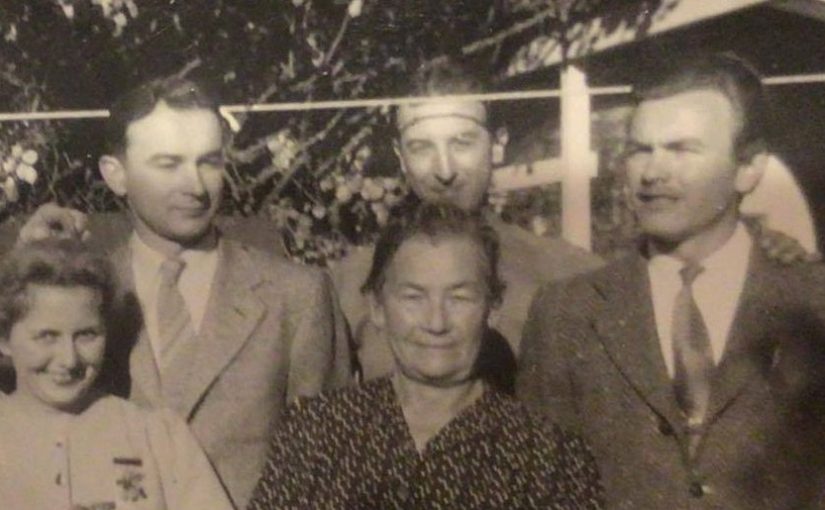
Photo: Irma center, her three sons (left to right, Pete, Tony, and George) and my mother, Ann, to her right.

Recollections: Vido Zarko

Vito (or Vido) Zarko was born in 1865, in or around Dubrovnik. I’m not sure of the location, but Dubrovnik is a good guess. My mother was a natural archivist. She kept bills for hotel rooms, annotated with amenities, other guests, what they had for dinner. I sorted through that material after she died in 2007, filed it carefully away, and shipped it to Scranton, and there it sits doing me not a whit of good. Specifically, and remarkably, she had Vito’s birth certificate, on which his birthplace would have been accurately noted. Sorry, Mom. Someday I’ll figure out a way of reuniting myself with all those files.

I do remember hearing from my father that Vito emigrated when he was rather young, maybe 16 or 17. He had brothers in Argentina and Brazil, so there is a chance that he went first to South America. I also remember hearing that Vito worked a merchant ship for awhile. So perhaps one of his ports-of-call was San Francisco, and perhaps he had friends or relatives in the Bay Area who met him there and convinced him to settle in The Valley of Heart’s Delight, as the Santa Clara Valley was styled before it went over to silicon. However he got there, he found a job as orchard foreman for the Willson family in Sunnyvale. They were famous for the Willson Wonder Walnut, a nut the size of a strong fist. Its shells were sold to Neiman Marcus in Chicago where they were used as packaging for kid gloves. Really. You can’t make that stuff up.

In exchange for his services Vito received a stipend and housing. From what I gather, neither was particularly generous, but he somehow managed to visit family in Croatia at least once, but probably several times, over the next fifteen or so years.

Somewhere in there he also procured land, three separate plots, on which he raised cherries and pears, and maintained a small vineyard. In about 1900 he made one of his trips back home to look for a wife.

That was a major journey at the time. A week by rail to cross the continent, some time in New York while waiting for a steamer to depart. More time in Liverpool to change craft, again in Lisbon or Rome, perhaps more rail and a crossing of the Adriatic from Bari. So, when he traveled, he stayed for weeks.

At some point during his trip in or around 1900 he suffered a serious fracture to his leg, and had to be taken to the Catholic hospital in Dubrovnik. Perhaps that happened early in his stay, or perhaps he didn’t have a way about him with the ladies, or maybe he just didn’t try hard enough, but whatever the reason by the time he was admitted to the hospital his search for a wife had not been successful. The date of departure loomed, he became desperate. He began proposing to the younger of the nuns. They treated it as a joke. 

“There’s a girl in the laundry room who talks about going to America all the time.  All the time. Maybe she’d be interested.” The sister laughed as she exited the ward. Vito called after, “Send her up, let me talk to this girl!”

Days passed, no one came. He was about to be dismissed from the hospital. Vito found the nun, reminded her about the girl, and insisted that he meet her. She was sent up.

“I have a nice life in California, orchards, I’ll build a house to raise a family in. Would you like to be my wife?”

“Sure,” the girl said, “what do I have to do?”

“I leave in three days. We need to get your documents in order. I’ll buy you a ticket for passage, and send money for expenses when I return to California. Where is your family?”

“The island of Brac.”

“Oh, there won’t be time to meet them. You can get permission from your father?”

“No problem. My sister wants to emigrate, too, and I already have a brother in South America.”

“It’s settled then. I’m Vito Zarko.”

“Irma Berosh.”

“Pleased to meet you.”

“You won’t be sorry, I’m a very good cook.”

Antony was born in 1904 after a stillbirth and a death in infancy. Pete came along in 1907, and George in 1922 when Irma was 42. They left the Willsons in about 1912 and built a small house that was added to as they could afford the cost of construction. The property it sat on was large enough to accommodate two barns, a large garden, a pen for livestock, and a chicken coup. It remains there today, and last I noted, all of the structures have survived – a curious anomaly in the heart of Silicon Valley.

Irma was a good cook, and by all reports Vito absolutely adored her. He died of a heart attack in 1935. 

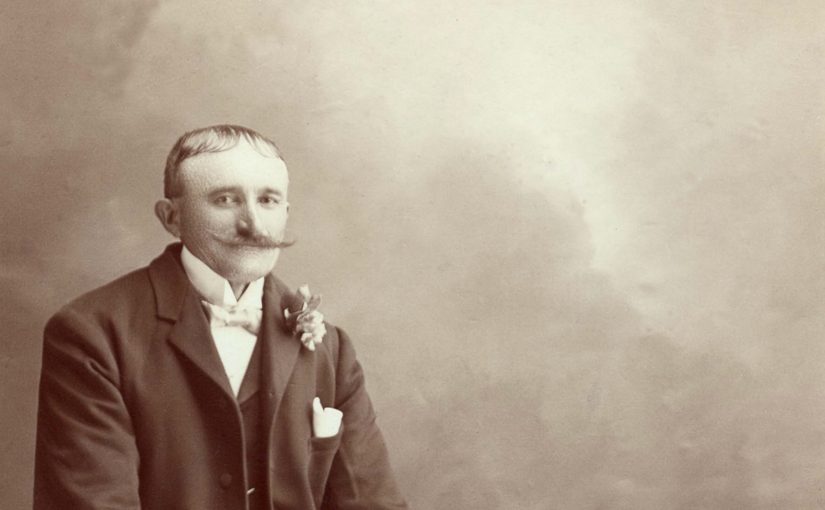
Photo: Vito Zarko in 1910.

For more on Vito click here.

Recollections: Christmas

Christmas Eve and Christmas Day are overwhelmed with memories of filling the trunk of the 1965 Ford Galaxy with boxes of gifts and platters of food.

Grandma Zarko died in 1965, and with her went the Christmas Eve meal of reconstituted dried cod surrounded in white. Supper moved to Marian and Bill’s, only about a block away on Pastoria Avenue but far, far away from the rooted-in-Dalmatia food and ambiance of Irma Zarko’s creaky, leaky, oh-so-cozy, farm house in the middle of town on McKinley. There was no mohair covered furniture in the house on Pastoria, nor a crusty pump organ. There was no knickknack display with shells that held the surf in their mysterious, spiral interiors. The floors didn’t lean. The walls didn’t shake when more than four people sat down to table. The air was not redolent of garlic. The refrigerator was not complimented by an ice box. There was no shiny spot next to the stove where the smoked goat meat dripped fat while it hung to cure when my father was a boy.

The house on Pastoria was solid and clean and beautiful. The fire roared at the hearth, the Christmas tree was lush with decoration. The air was scented by wassail and ham. There was a pleasant buzz of women’s voices as the various dishes were unwrapped and uncovered. The house on McKinley was Irma Zarko’s domain, the stoves were hers, the smells and the traditions. On Pastoria, holiday feasts were coordinated between branches of the family, and new traditions formed spontaneously.

And there were my aunt Marian’s windows.

Marian taught art at middle school for all of her career. She was herself an artist, designed the house on Pastoria, and planned the magical back yard with its secret corners, ferns and mosses, and a lording redwood or two. I loved daydreaming about the sorcerers and strange creatures that populated that garden while laying on the grass or in a hammock. Her kitchen always had the text of a nursery rhyme – with periodic illustrations – playfully marching across the walls just under the ceiling. And at Christmas, she created windows – translucent paper cutouts, brilliantly colored – of carolers, or Santa in his sleigh, or a manger scene, angels astonishing shepherds.

When she first began putting up her scenes, the front window was comprised of twenty or so individual panes held together with mullion. The elaborate pictures she created were a composite of pane-sized drawings that managed to rise above the glazier’s factions to render a narrative whole. Later, she and Bill replaced the fragmented window with plate glass, and her holiday job became considerably less complex. But the energy she put into the windows did not, and her plate-glass fantasies became richer and bolder with every passing year.

Our house on Mathilda Avenue had three plate-glass windows, one large and facing the street, one half that size around a corner also in the living room, and a similar one in the dining room that looked out onto the front porch. One year, I decided to try my hand at a holiday window as inspired by my talented aunt. It was a scene of several gangly figures throwing snow balls. Never mind that at that point in my life, I’d neither seen snow nor made a snowball, let alone thrown one, it was my vision and therefore valid. The color pallet ranged from off-white to grey with a bit of brown and dark blue thrown in for vibrance. My parents suggested that perhaps it were best placed in the dining room window where guests passing towards the front door would see it. I was flattered. That it held that position so as not to be visible from the street escaped me.

I worked hard at realizing my design, and installed it according to my aunt’s instructions. When I saw it up, my first impulse was immediately to take it down. Not only was it not well-rendered, it was ugly, and rather an insult to the season. But my parents encouraged me to leave it. So it stayed up for two agonizing weeks, while I cringed every time the doorbell rang, because a ring meant that another group of visiting friends had seen my work, and being an only child, could have assumed its maker to be no one else but yours truly.

When it came time to dismantle my creation, I had become so expert at denying to myself that I had had anything at all to do with the monstrosity, that I made no effort at its removal. Finally, well into January, my mother took it down while I was at school. It was a huge relief coming home that day to find the window unobstructed and clean.

“I rolled it up and put it away for next year,” she announced consolingly. Marian always saved her masterpieces, so of course I would do the same with mine.

“Or maybe you’ll make a new one,” she suggested. I shrugged and thanked her for dealing with it.

The following year there was a new window scene on Pastoria, as there was almost every year (if it were a busy fall, Marian might put up an old favorite) and having tried my hand at the art, I loved her windows even more. No one suggested that I establish a similar tradition on Mathilda Avenue, and I thought that just fine.

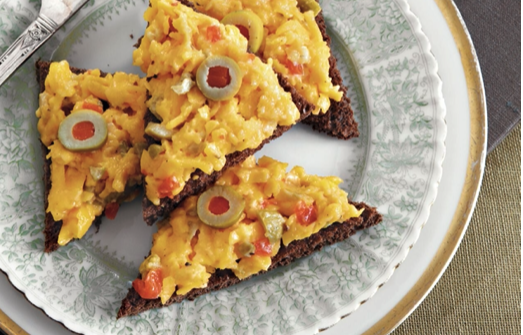
But food traditions were being established on Pastoria. The first Christmas Eve without Grandma Zarko’s cod, was, if I remember correctly, rather heavily populated, so recipes were sought to feed the masses. Marian discovered one for open-faced grilled cheese sandwiches. They consisted of a hamburger bun, lightly toasted, with yellow cheese melted over sliced cocktail olives. The green and red of the olives suggested Christmas. They were easy to manufacture, so dozens could be fed. Shirley found a recipe for stuffed mushrooms with bacon that was likewise easy to multiply. Trays of the stuff were made available. I loved it all.

“I don’t care what you have for supper, long as it doesn’t have cheese,” cousin Linda’s husband Rudy announced at some previous family function. “I hate cheese.”

Perhaps Marian had forgotten, or perhaps she hadn’t taken it seriously, but the supper as planned was the two items aforementioned and salad, and I seem to remember that Rudy didn’t much care for salad either.

When Linda pointed out that her husband would not eat a sandwich that was half cheese, a strategy session ensued. I believe it was Shirley who suggested that Rudy be told that in deference to his tastes, there was no cheese in the meal. Sandwiches, mushrooms, and salad were served, several people enforced the notion to Rudy that no cheeses had been harmed in the making of supper, and he ate the same meal every Christmas Eve for years. Liked it, even.

What the truth of that cheesy story is, I suspect I will never know, but it lived into tradition along with the sandwiches for at least a dozen years. The next generation hated those sandwiches, and when venues changed, they followed salted cod into the realm of memory.

Photo: the sandwiches were kind of like these, only round.

Recollections: Mary and Jack

Driving the seven miles to my mother’s sister Mary and her husband Jack’s house, was filled with sweet anticipation. When we visited, Mary often served a meal, one that might include homemade ravioli with pesto sauce, a tangy salad with clementines and finocchio, and a boysenberry parfait, none of it standard fare for the period. I didn’t know how lucky we were, it was just what Aunt Mary cooked. 

Jack built the house they lived in. He dug the foundations, fitted the molding around the doors, and did everything in between. When his wife’s culinary aspirations outgrew the kitchen, Jack gutted it and built a new one – in record time so as not to be deprived of Mary’s cooking any longer than was absolutely needed. 

They had wanted children, especially Mary, but one or both of them were not physically capable, and in those days there were no fertilization clinics offering alternatives. So, the creative urge overflowed into daily life. Mary gardened, sewed quilts, cooked, baked pumpkin pie out of season, organized trips, laid many tons of brick, won prizes for her canned fruit at the county fair, taught English as a second language, and did all of it exceedingly well. Jack built potting sheds and hothouses, decorative bridges and birdhouses, loved the outdoors, and in their early years together, he shot movies. 

A rather imposing black sedan drives onto the Lopin ranch and stops just beyond the pepper tree. The driver’s door opens, Jack gets out. Mary exits the front passenger door. They walk towards the camera and pass out of frame. A moment later, Jack jogs back into the picture. He forgot to open the rear door for Mary’s parents. He does and Mrs. Lopin climbs out of the back seat on the driver’s side Her husband exits on the passenger’s, they join hands at about the rear bumper, and pass out of frame. Another brief moment, Mary’s brother John climbs out of the rear seat and closes the door behind him. Instantly, the front passenger door flies open and my mother leaps out. As she crosses towards us, her brother Martin appears at the rear driver’s side and exits. Then in rapid succession, Uncle Nick, Aunt Florence, and an unknown neighbor all exit the car together and close the doors behind them at once. Stillness. The rear driver’s door opens slowly, tentatively, and Grandma Lopin climbs out again. She signals to someone in the car, waves, and walks towards the camera. Her husband Nick nimbly follows. All doors open at once and Jack, Mary, and my mother Ann and father Pete exit the car and walk briskly towards the camera. No sooner are they out of frame that in succession, doors open, someone exits, doors close, others exit, crowds pass out of frame. There follows a long pause. Jack opens the driver’s door, climbs out, checks himself in the mirror, closes the door with his hip, and walks towards us while lighting his pipe.

Confession; I had to make some of that up because I’ve not seen the film in at least 15 years, and my memory isn’t that good, but my description is close. The car looks to be from the late 1930’s, so the film may have been shot just before or after the war.

He told a good joke, Jack did, replete with accents, characters, and excellent timing. “Don’t waste your time with frills, he’d advise. Set the scene, establish character or situation, and get to the punchline.”  Jack was a union carpenter.

The scene is Santa Clara County fairgrounds, the racetrack. The camera scans the empty bleachers, rather dolefully. The emptiness looms, is sad, total. The camera pans past Mary. When she is almost out of frame, she waves. The camera continues to pan at exactly the same rate of speed, so lonely that it takes a moment to realize Mary’s presence. The camera stops, thinks. Then it makes a tentative reversal, pauses several times while it wonders if the girl it saw was real, and finally discovers Mary. She waves. The camera zooms leisurely, but lovingly, in for a closeup. 

There’s more to that one, but I don’t remember the end.

There are several other shorts on that reel of film. I have it in Scranton, well protected. One of the times I was back after moving to Orvieto I intended to go to a reputable photo shop to have it transferred to DVD, but never did. I must. They are precious gems of cinematic art in Jack’s most whimsical and unschooled voice. 

How he convinced my family of farmers to participate in his movie-making, I will never know. He made actors of them all. And I learned more about who he was through his film projects, than I ever discovered spending a week at a time with him and Mary at their house in San Jose. That is often true of artists. 

With Mary I have the most vivid memories of brick. They had a large back yard with defined zones. There was the area under the Japanese elm, the rectangular lawn fenced with white pickets, the southern side yard with its dahlias and peonies, the northern side yard with hydrangea and azalea, the vegetable garden in the way back, the clothesline and its fruit trees. The lot was connected with gravel paths, and one spring day in the early 1960’s Mary decided to make one of them brick. She asked Jack for a few tips. It was quite successful, so she kept going and eventually laid a hundred or more feet in paths, three patios, several planters, and a low wall around the elm. Then she sat in the sun and read.

Mary died before Jack. For both their sakes, I had hoped that it would be the other way around. Jack had never balanced a checkbook, paid a bill, or cooked a meal. He was lost without her. The drapes in the front window were closed for her funeral, and he never opened them again. When he showed up at family affairs, he was still funny, his timing still spot on, and he had grown softer from having had to summon Mary’s spirit for help in living the day that lay before him. But it felt as though he were biding his time, waiting for his beloved “Mar” to come fetch him, to encourage him in his flights of fancy, to star in his movies, to laugh delightedly at his jokes. To lay brick and bake pumpkin pies out of season and win prizes at the fair.

Ordinary people who quietly do extraordinary things. Our lives are filled with them, when we take the time to notice.

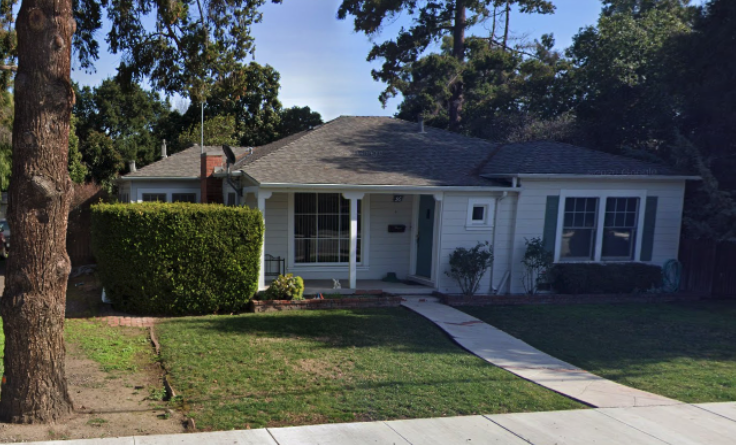
Photo: Jack and Mary’s house, still unchanged from the outside; makes me wanna hug whoever bought it.

Recollections: The REO

In my late twenties and early thirties, I lived for two-plus years in San Francisco. A small Equity Waiver house was bequeathed to me by its creator, who said she chose me to pass it on to because I was a man of the theatre. I was thoroughly smitten by that characterization, and by the city’s theatre community, and stunned by what seemed at the time to be extraordinary luck. I was also, as has often been the case with my leaps into the unknown, thoroughly clueless. But I understood the basic laws of improvisation, and I can say with some assurance that the group I formed had a good time laboring under my ramshackle leadership.

Our little company became friends with the theatre folk at the Women’s Center, and I became friends with a grounded, talented, and very interesting playwright who worked there. When she found out that my father had recently been diagnosed with Parkinson’s Disease, she gave me tickets to a play she had written about her mother’s encounter with the same. The script echoed future experiences of mine, was solidly written, and lovingly performed. After a dozen scenes of courage in the face of a slow fading away, the last scene featured her mother, completely restored, saying, “the Parkinson’s is gone”. I was swept up in hope.

“Your mother recovered!” I enthused after the performance.

“Only in my dreams, and in the dream end to my play. Do you think it’s a good ending or is it confusing?”

“It’s the perfect ending. It’s why we make plays. Maybe someday medical reality will catch up to the theatrical.”

I felt foolish for having fallen for it, but I also devoutly believed that the disease could be beat, or at least trained to behave. Such was not the end of my father’s story, however. His last year and a half were a misery.

Last Thursday my excellent physiotherapist, Katrin, took me to a neurologist. The months of inactivity that followed an injury to my Achilli’s tendon really exacted a price regards my Parkinsonian symptoms. I was slower, more hunched, hoarse, and shuffling to an extent I had never been. He gave me a crash course in synthetic dopamine replacement that would, as he said, leave me symptom free in two weeks. I don’t say no to such promises, so I began that evening. Since then I have been hollow and shaky, have had tighter-than-usual muscles, and I’ve slept no more than four or five hours a night. Presumably the road to mitigated symptoms crawls through a dark forest teeming with ugly spirits. I will persist, however, for hope, once granted, is not a thing to be carelessly wasted.

My father’s life-long hobby was the restoration of antique (pre 1925) automobiles. From the time I was four to a year or so before he died, he worked on a 1912 REO Runabout that was set up on blocks in our basement. He and his brother had discovered the machine under a collapsed roof of a lumberyard in San Mateo. What wasn’t metal had rotted away to faded scraps, but he was determined to salvage a functioning automobile from the pile. He had seven other cars in much better shape he would also work on, but the poor REO had captured his heart.

One visit years after he was diagnosed, he greeted me excitedly at the side door to our house.

“I want to show you something,” he said, leading me to the basement. He plugged in the overhead tube lights, and stood back. “I finished yesterday.” He had restored and installed the rear axel, chain driven, a mechanically significant event. “Took me all week.”

I congratulated him, then struggled with the realization that the gear box that housed the chain was on the wrong side.

“Maybe I don’t understand how it works, but…”

He saw it as I did. Truth through the eyes of the son.

“But I’m here for two weeks, we can redo it together. It’ll be fun! You can teach me things.”

He turned, unplugged the lights, and went upstairs without me.

The rear axel to the REO was his “the Parkinson’s is gone” moment. It was his theatrical statement of altered reality. After that, he gave up. His best friend Les finished the REO after Dad died, lifting it from its basement hideaway into the air and light of the six car garage Dad had built after he retired. I helped in my limited fashion. Then when it was finished, my mother sold the car to a fellow who adored it, improved it, and (by now) probably passed it on.

I will give the drugs the two weeks the doctor quoted me, then if I can find a neurologist versed in the use of Mucuna Pruriens – levodopa in its natural and possibly more effective form – I will ask questions. And all along the way I will imagine what a total healing would be like, see if I can coax an unexpected resolution (aka a surprise ending) into being.

I am, after all, now and always, a man of the theatre. One is not meant to deny one’s nature.

Recollections: Homestead Rd.

July was all about cutting cots.

The Lopin ranch was ten acres of apricots and prunes, with a few almonds thrown in for good measure. Harvesting prunes was ugly work, according to my mother and aunt who participated in their collection from the time they could walk to the time they were adult enough to find valid excuses not to. Prunes are plucked from the ground. Enough said.

Production of dried apricots is labor intensive, but doesn’t involve much stooping, kneeling, or bending over, so we all participated annually until my uncle, who ran the operation, declared it done. I’m not entirely sure when or why he no longer needed family participation in production of the fruit, but I do know that its beginnings predated my consciousness by several decades. 

The apricot ripens according to the weather. A hot June and July will trigger rapid ripening, and as the best fruit for drying needs still to be firm, Uncle John’s expertise in knowing when to pick was necessarily well-sharpened. Family members would receive a phone call, “We start picking day after tomorrow, if you can cut, be there at seven.”

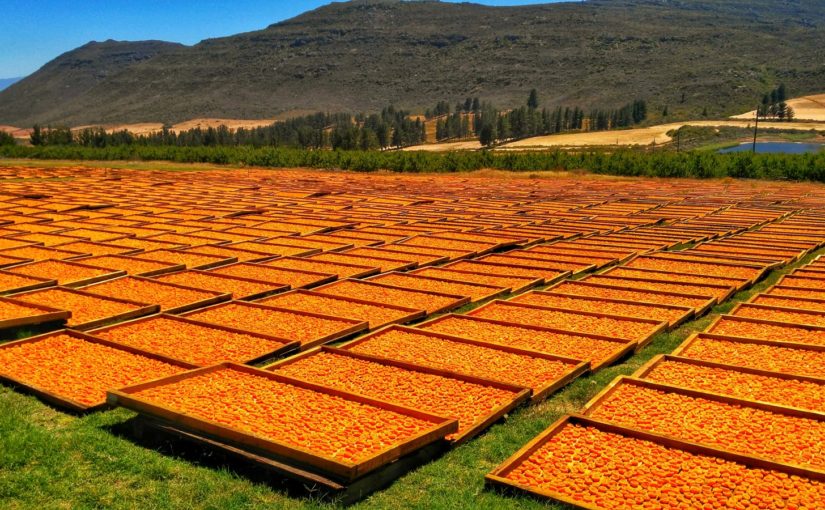
The apricot’s journey from tree fruit to dried fruit has several stages. The first is obviously to pick. But even that is nuanced. The over-ripe fruit was sequestered for use in producing “slabs”, thick pieces of irregular size, very sweet and soft. Under-ripe fruit needed to be left on the tree for a second, or even a third, picking a day or two later. The ready fruit was placed in large wooden boxes which were stacked in the cutting shed. That’s where we cutters came in.

The fruit was cut along its natural cleft, the pit removed and tossed into a little wooden box that sat on a single nail on one side, and on the rim of the tray on the other. Then the two apricot halves were carefully placed on the tray in rows, all pieces touching their neighbors, but always level so they would dry without forming clumps. Each cutter’s trays were stacked as they were filled, so you would begin the day seated and end it standing on a progressively taller tower made from fruit boxes.

Towards afternoon when enough trays were filled to justify, they were loaded onto a trolly that ran on a kind of railroad track between destination Sulphur House and destination Drying Yard. In order to protect it from grubs and burrowing insects, the fruit was shut into a shed where it was fumigated with burning sulphur. That process also helped the fruit keep its brilliant orange color. If you got downwind of the shed, it gave you a brilliant orange color, as well.

After several hours of fumigation, the trays was rolled to the other end of the track, and set in the July sun to dry, each tray overlapping the next by a couple of inches to keep the batch from soaking up moisture from the ground. Depending on the weather, the fruit would take up to a week to dry, then it was scraped off into the multi-useful boxes, and taken to one of the packagers in the Valley for distribution and sale.

I accompanied my mother, whose early years were filled with fruit production tasks, from before my first birthday, and went every summer until sometime in my teens. The first few years were playtime. My cousin Gail and I got Uncle John to build us a house from empty fruit boxes and trays which we would furnish with items we found, Gail (being older) ducking out to go to work as a cutter after we had settled in. Once I could reach a tray and wield a knife without presenting danger to myself or others, I too left the cozy cottage to go to work. A year or two later, I was there at seven with the rest of the family, sharing a tray and getting half the fifty cents (when I could finally cut at speed) that we were paid for each one we filled.

Gail was amazing. In my memory, she could regularly cut twenty or more trays by herself in a single day. She assumed heroic proportions in my mind. Didn’t hurt that she was also an accomplished violinist. Really didn’t hurt that when she was old enough, she learned to drive on the Maxwell touring car turned into farm vehicle, carrying the men from tree row to tree row and retrieving the full boxes of fruit. She was a kind of wonder woman to me.

Work days were filled with gossip, interesting discussion, lots of joking around, and laughter, and on a good year, vocal admiration of an especially fine apricot. When my grandmother was still living, the day was punctuated by her pitchers of fresh squeezed lemon aide, and by her lunch spreads. I would have gladly cut for free and taken the food as payment. Not that I was so bold as to offer.

One Sunday when I was maybe twelve, my folks dropped me off alone for a day’s cutting. It was the equivalent of a Bar Mitzva and Holy Confirmation rolled into one coming-of-age adventure for this kid. I cut like a demon, took few breaks, didn’t bleed on anything, and produced beautiful orderly trays for the drying yard. At the end of the day, Uncle John handed me two five-dollar bills and two more silver dollars, one Morgan Liberty and one Peace dollar. I was so excited I ran in circles until my folks came to pick me up.

I have no recollection of how those twelve dollars were spent, but it was a small fortune, and I hope I used it wisely. Probably not.

Of course, the best part of cutting was the family chatter. That’s where we got to know each other, brandishing knives and throwing pits in to small wooden boxes,where they produced a pleasing, rhythmical shplunk. That’s where I learned that these perfectly ordinary people were in fact extraordinary people, something I forgot in my mid-teens and, in some cases, failed to remember until it was almost too late. 

When Grandma Lopin died, the ten acres were divided up among her sons. I’m not sure what the arrangement was exactly, but John kept farming until he sold his few acres and the house in 1974. The trees were replaced by an electrical substation and a go-cart track. I don’t blame him, tax protections for farmland had disappeared by then, and growing fruit was no longer worth the hard work. But if it were magically possible to pick up a knife and fill a tray of cots surrounded by family, I would be there in a heartbeat. 

Recollections: A Long Walk

A small ground floor room, three people, two lamps, the scent of bacon.

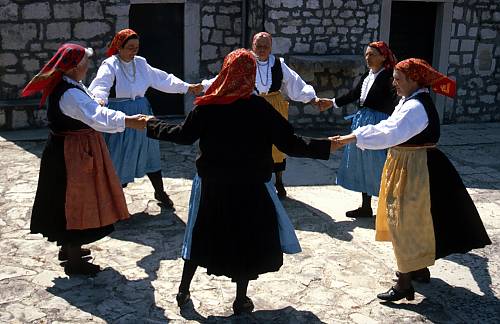
One of the cultural events I attended at Dubrovnik’s Libertas Festival was an evening of folkloric song and dance. One of the dances was silent. The only sounds that accompanied it was the shuffling of the dancers’ feet, an occasional finger snap, a collective sigh. The program explained that this was the dance of the refugees of war and of the Resistance, but either the description stopped there, or I stopped understanding.

During the war, the Croatian government became complicit with the Nazi occupation. A faction among the Serbs, who never got along with the Croats anyway, took that as an opportunity to cast their fellow Slavs – all of them – as the enemy. The selo of Gaic, where Petar and Stoja live, is extremely remote, and Serbian Resistance were scouring the countryside, terrorizing the inhabitants, and leaving much blood in their wake. For my cousins, staying put was not a option. So through the help of an underground refugee movement, they escaped. They didn’t know where they were going, how they were getting there, or when they would arrive. All they knew was that their lives and those of their children depended on leaving Gaic immediately.

So, Petar, Stoya, Petar’s sister-in-law, and their combined eleven children (one still a babe in arms) set off one night on a walk with little or no preparation. They walked for months. Their destination was always the next safe house (or farm, or factory, or cave) but they never knew two destinations in a row. Nor did they know when they would be able to stop walking. They only traveled by night, and carried no illumination.

There was, and perhaps still is, an ancient tradition among the southern Slavs, that when traveling by foot, if you meet other travelers you share food, drink, and dance. And when Petar and his family met other families along their route, they upheld the tradition. The food they had to offer was slight, and the dances were silent. The only music was the sound of shuffling feet, an occasional finger snap, a collective sigh.

The family crossed into Austria at an unpatrolled section of border. They were directed to a farm that had several large barns, and there they stayed for the duration of the war., working nights for their keep and staying hidden during the day.

“What happened when the war ended?” I asked, almost breathless from what I had just heard.

“We walked back. It was easier coming home. Protected zones were relatively safe, so we could travel by day most of the time. We even got rides in autos and wagons… Well, some of us did.” He translated for Stoja. She laughed and said something in Croatian. Petar translated for me.

“She says, ‘I was a good-looker in those days’, and it’s true she was. That meant we had to be extra careful. But now and then some young guys who missed their sweethearts, I guess, just wanted to be nice to a pretty girl, so she’d climb aboard with five or six of the kids, and the rest of us would have to walk double time to keep up.”

“What did you find when you arrived home?”

“Things were in sad shape, but we put them back together. Everyone in Gaic had taken a journey. Ravno was practically empty, too. But here we are,” he breathed in deeply. “Well. Tomorrow we take in the hay!”

Petar was up at dawn. He took his cow on a twenty minute trek to good pasture, every morning, while Stoja made bread and stew. He was eighty years old at the time.

“I’m slowing down. I walk (five kilometers) into Ravno and have to wait until the next day to walk back.”

When he returned from grazing the cow, the three of us sat for breakfast; a glass of plum brandy with bacon and cheese and bread, and a large pastry with the strongest Turkish coffee I had ever tasted. The brandy sent me for a loop, the coffee wired me. I didn’t know whether to scream or fall asleep. (They did this again at “tea time”, mid-afternoon.) Then they left for the hay field. I followed best I could.

The hay field was a plot of land that measured maybe a quarter of an acre, that they had planted in alfalfa. Once I had caught my breath, Petar explained that rain was expected the day after tomorrow, and that rain would spoil the hay.

“So, we do this right now.”

“Great! What can I do to help?”

“Sit right here on this rock.”

“Okay.”

“Watch. Tell your father and uncle what you see.”

“I’d love to work if you show me what to do.”

“Sit. Watch.”

So, I sat and I watched, feeling useless and guilty as hell. 

Petar had sharpened his scythe the previous evening, and now displayed an almost balletic mastery of the tool. The grass fell into neat rows, Stoja raked it into piles with all stems lined up, and onto a large cloth that had a loop at one end, and ties on both. Together, she and Petar rolled the fabric into a kind of burrito stuffed with hay, and tied it off. Then Stoja put the padded loop onto her forehead, and carried the roll on her back to the hay barns. They were not far away, the barns, but this was clearly the most efficient way of filling them.

While I sat and watched my cousins work, five men on horseback rode past. They were dressed like the dancers in the folkloric festival I’d seen, only they looked, and were, real. Petar and Stoja waved, the men waved back, a few words were exchanged and the group moved on.

“They’re from (the forgotten name of a nearby village). Muslims. Good, honest people, excellent neighbors. They’re hunting today, small game. They raise sheep, actually a kind of goat suited to this terrain, but they look like sheep. The best cheese!”

After another hour or two, Petar sniffed the air and announced that the rain had changed its mind and would come a day later.

“No need to hurry, now. Time for lunch.” The scythe and rake were leaned against a barn, and we strolled back to their house.

Photo: a modern, town version of the silent dance.

The Hudson

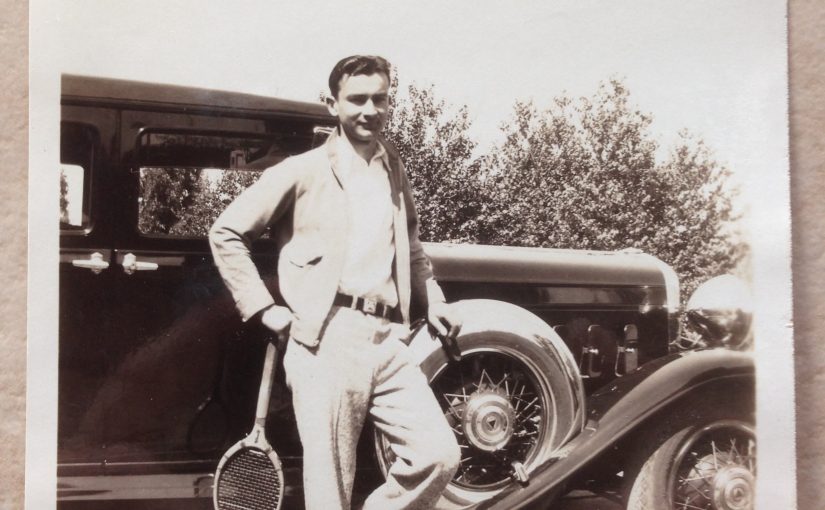
A twenty-five year old Pete Zarko leans on a tennis racket, one foot on the running board of his Hudson motorcar. It was a classy vehicle, a luxury sedan, fitted out with all the best accessories. Not a bad purchase for a young man starting out as an auto mechanic who, with his brother, tended the family orchards on weekends. The photo is dated – accurately I’m sure, by my mother whose archival talents were considerable – 1933, two years before they married and during the depths of the Great Depression.

How’d you do it, Dad? 

I do not mean to cast aspersions. My father was as honest as they come. If he discovered a 8-cent error on a customer’s bill, and the bill had already been paid, he’d spend ten cents reimbursing the overcharge. That’s the honorable thing. It’s what you do in business. Besides, the casting of aspersions has become sickeningly popular, and I tend to buck trends rather than follow them. So, nothing implied.

I’m just saying. Serious question. How did you do it?

Once he was in his thirties, the tennis racket was put into a closet (and later, a basement). The Hudson was replaced by a Ford pickup he bought for above market from a Japanese-American customer who was being sent to an internment camp. The fancy clothes I never saw. They went away somewhere well before I was born. For a brief period in the early sixties, he and his brother Tony bought a 30’s era Hudson (a beautiful thing, cream-colored with a tan canvas top) that they enjoyed for awhile then sold for a profit. But during my childhood Dad left the distinct impression that he was embarrassed by the stylish indulgences of his youth. He kept one sports coat, a herring bone tweed, that he wore for dressing up the entire time I knew him.

When I was seventeen, and beginning to wake up to the possibility of fashion, I wondered furiously what happened to the camel hair top coat and the cashmere sweaters other photos showed him wearing. I was way too skinny to have made any use of them, but cool is cool, and I would have loved to have at least tried them on. His bowler hat I discovered in the basement. It was still in its oval box. I would take out from time to time to ponder its stiffness and generous size.

How my father managed to buy such fine clothes in an era of block-long lines for soup kitchens — aside from his living in a farming community in northern California — may have been due in part to his scrupulous attitude towards money. He wasn’t afraid to spend on whatever he considered worth the cost, but he placed paying his debts ahead of taking vacations or buying a popular new appliance. I agitated for the travel, my mother for the blender. Since Mom kept the books, the blender eventually fell into budget. Road trips were more complicated, but my travel urge was sometimes satisfied by careful research as to which favored destinations boasted antique autos.

Vintage and antique cars got us to Hearst Castle, to Harrah’s collections in Reno, to various spots in the Gold Country where unusual vehicles could be found, and to state parks and beaches to frolic with collectors who gathered to show off their prizes. I loved those cars, too; the majestic, the absurd, the odd, the extravagant. The names alone were enough to warrant fascination – International Autobuggy, Hispano-Suiza, Mighty Michigan. The Simplex-Crane built in the shape of a boat by a shipping magnate in San Francisco. The Stanley Steamer that used a specially heated splash-pan to build up a head of steam on demand — the deficit of steam cars being the long wait before you could go anywhere. The embroidered electric cars with drivers’ seats that could be reversed to facilitate conversation with rear-seated passengers (presumably while parked). The perfect Tucker that broke so much automotive ground the big car companies felt compelled to litigate it out of existence, which once done allowed them to steal all the best patents.

My father owned seven antique cars in various states of decrepitude, and two antique motorcycles. His goal was to restore them all, but he couldn’t say no to his buddies. He restored several of their cars during his retirement, but only finished three of his own. Those were a Model T Ford, a Grant roadster, and a 1923 Hispano-Suiza. The Hispano was a real beauty. It turned out, however, that the original body had been substituted by one from a contemporaneous Cadillac, and that severely reduced its value. He sold it to a doctor in South Dakota who drove it all around the country, despite a gas tank that emptied into its straight six engine with alarming speed.

Some photos show my father with a pipe, another accessory I never witnessed his use of. I do, however, remember him saying in the car one night – provoked by what, I don’t recall – that if any child of his was ever caught smoking, he would beat the living daylights out of him, and for his own good, too. I was an only child, so I got that message loud and clear. Those words were as close to physical punishment as he ever came to giving. As for me and tobacco, my Croatian cousin, Pero, was a smoker, and to be polite, I would accept a cigarette from him from time to time. I pretended to puff, and after a minute or two dropped it into whatever body of water was close to hand. I’ve never understood the appeal of nicotine.

And when style is betrayed by truth, Dad’s pipe and Hudson sedan may have just been photographic props. Even the camel hair and cashmere may have been on loan. In fact, I have vague memories of that being the case, but there is no one left alive to ask. The racket and tennis whites are real, however. Because he loved playing tennis in his twenties, he convinced me to take it for physical ed in my first year of college. It was the only class I ever flunked.

I’d give anything to have a photo of Dad in his well-greased overalls, foot up on the pickup’s running board, no tennis racket. Just for symmetry.