Recovery & Repair

SATURDAY 25 MAY

Celebrate the little things, thus has been the advice from my Friend for the last few weeks. Here are some little things:

  • swallowing has become smooth, for at least three weeks now, and after several weeks of choking or almost choking daily.
  • I was retaining my water for four and five hours at a time, after ten years of an urgent need to pee whenever I even thought about it. What freedom! Then it went away two days ago, but I have hope that it will return.
  • limpness of muscles, especially the legs; I’ve experienced this before but never to such a degree. This is a recovery symptom so I try to view it gracefully.
  • snap jaw gone; this is wonderful. 
  • sharp pains in feet have gone from several times an hour to once or twice a day. This is also wonderful.
  • on the other end, Sunday and I can hardly move – uncomfortable and annoying.

Typing is still difficult and my time at the computer has been taken up with other things, so these reports continue to be rare. Thanks for reading. Your support means a lot to me. Onward!

Recovery & Repair

Friday 19 April

Tuesday of this week, walking in the garage was almost normal for 20-30 meters at a time. Wednesday night I slept straight through after only two restarts, and turned freely and spontaneously in bed. Thursday I felt released of some burden. This morning my session on the rower was ninety percent perfect. And so it has been for the last few weeks, one good step ahead per day, but not yet anything that repeats itself immediately or seems to build on its previous occurrence.

I’m also involved with re-mounting my play, Colloquia, which soaks up my limited time on the computer, so that accounts for my recent absence from this blog. But if you see a fund raising notice somewhere, that’s me struggling to type, so please respond if you’re able and/or pass it on. The when, where, and how of production will be announced later in April.

[from Recovering from Parkinson’s by Janice Hadlock]

“Some people turn off self-induced pause gradually, some even going two steps forward, one step back, for months or years. They might find at first that they have odd moments, now and then, during which they feel different – not on pause. In these moments, the mind is more relaxed and movement in some parts of the body feels more fluid. If a person keeps up or intensifies his mental self-therapy, these moments gradually increase in frequency and duration. Eventually, these people find that they are using self-induced pause mode only once in a while, usually when they are concerned about something. The people who recover gradually, who turn off pause in fits and starts instead of instantly, might have a harder time believing, at first, that something is changing for the better. Even when their use of self-induced pause mode occurs very infrequently, maybe once a week for a few hours, they tend to be terrified, each time, that their Parkinson’s has returned as strong as ever. Even so, they can eventually recover fully and have no more relapses.”

Teatro Kamina

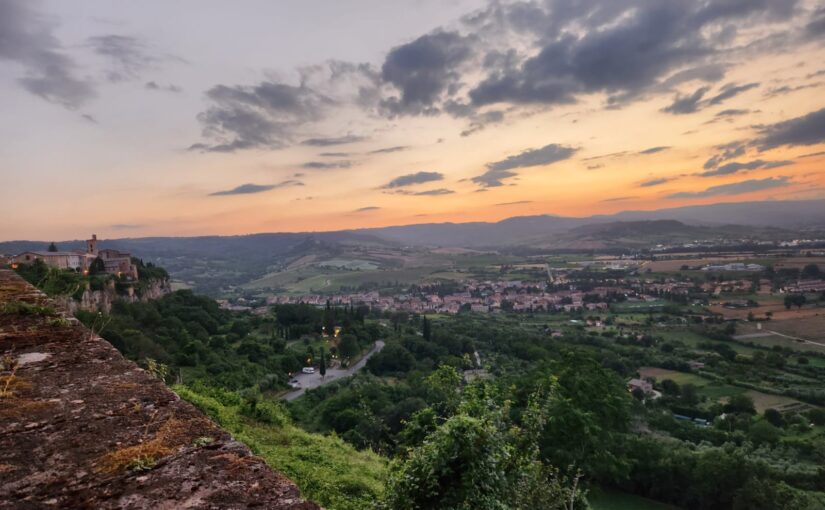
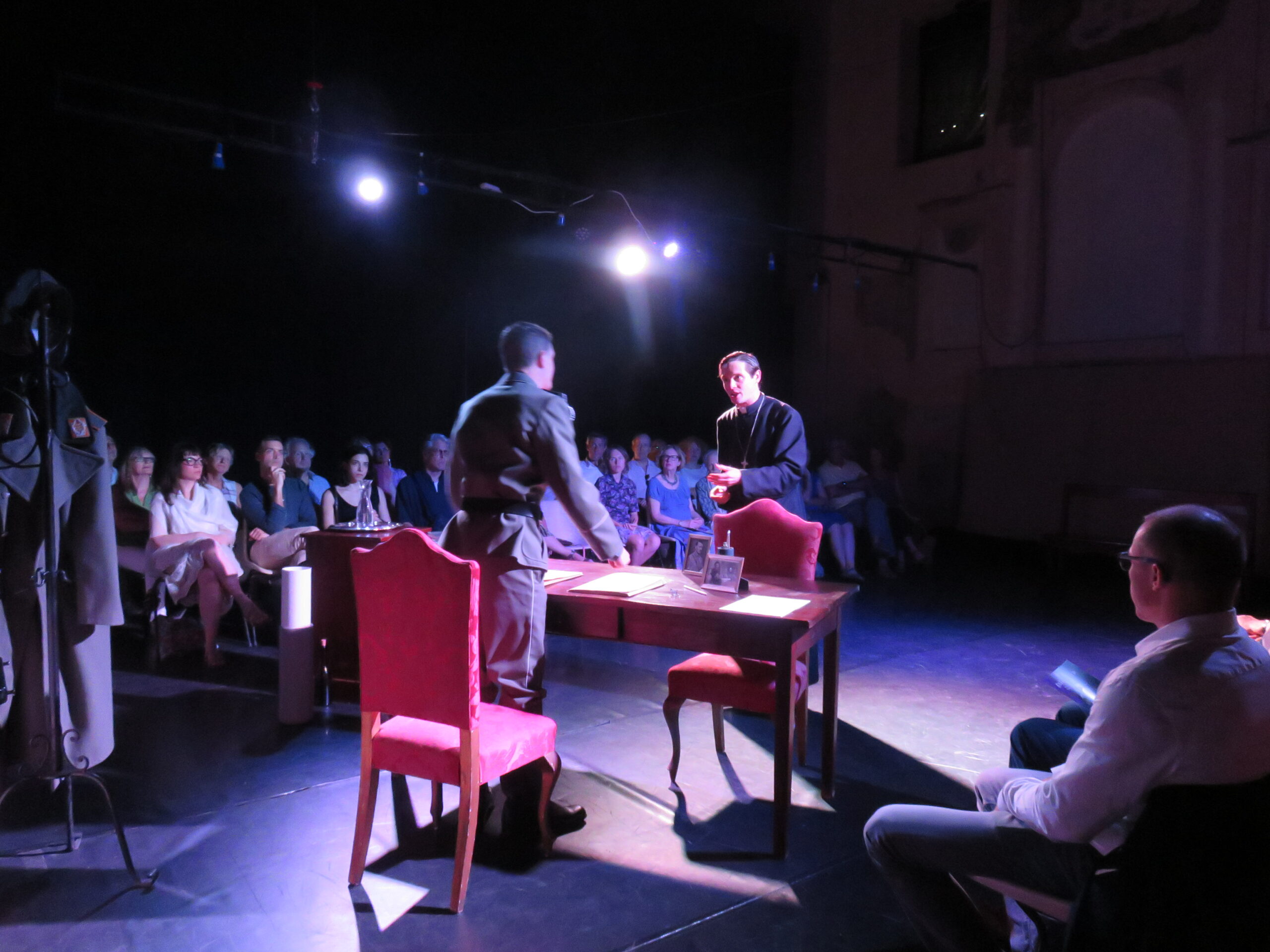
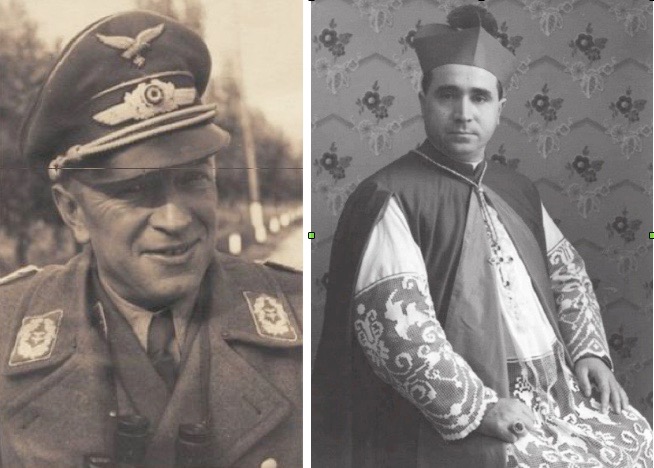
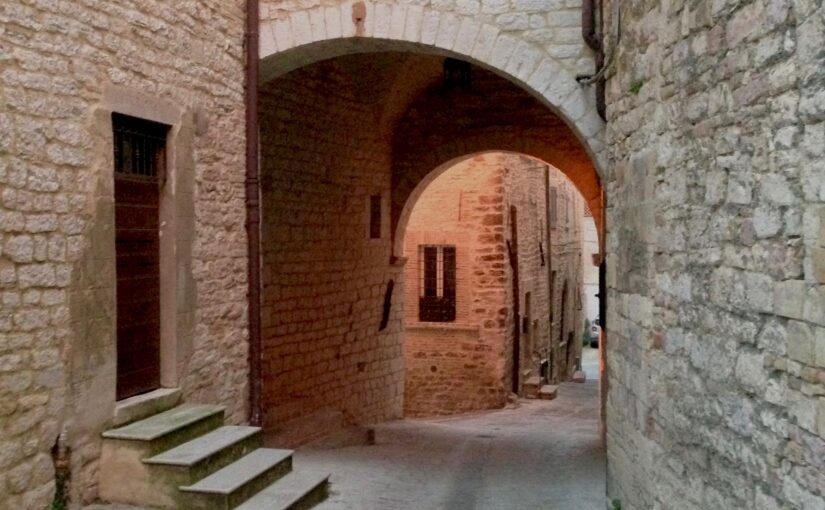
It is the waning days of the Second World War. Allied forces are bombing targets in Italy. The retreating German army enacts a scorched earth policy. In the Umbrian hill town of Orvieto, its Italian bishop and the German commandant grapple with the grim realities the war’s conclusion brings to daily life. The city’s artistic and historic heritage are on the brink of annihilation. Cherished beliefs are thrown into doubt; shifting loyalties, changing ideals. The two men clash over their differences throughout the winter and spring of 1944, but when they discover a shared admiration for Bach, it inspires them to create a way to save Orvieto. 

Colloquia (conversations between enemies) by David Zarko.

Classic Radio Road Show of New Jersey has been invited by Teatro Kamina to bring its English language production of this powerful play in Orvieto, Italy, both to compliment its production in Italian, and to join other events commemorating the 80th anniversary of the Open City declaration of 1944 that spared Orvieto from bombardment. 

Help send Classic Radio’s production to Orvieto with a donation of any amount. If you plan on being in Umbria on June 16th, a gift of €80 or more guarantees your seat at a concert on the panoramic terrace at Villa Clara featuring the a cappella quintet Cherries on a Swing Set who will perform their arrangements of popular music of the 1940’s, specially created for this occasion. Seating is extremely limited.

YES! I will support Classic Radio’s production of Colloquia by David Zarko!

YES! I will contribute €80 or more! Place me on the list of priority guests and guarantee me a seat for Cherries at the Castle, the concert at Villa Clara.

Number in your party:

Amount per person: €80 €120  €160 Other TOTAL €

Email:

Classic Radio

It is the waning days of the Second World War. Allied forces are bombing targets in Italy. The retreating German army enacts a scorched earth policy. In the Umbrian hill town of Orvieto, its Italian bishop and the German commandant grapple with the grim realities the war’s conclusion brings to daily life. The city’s artistic and historic heritage are on the brink of annihilation. Cherished beliefs are thrown into doubt; shifting loyalties, changing ideals. The two men clash over their differences throughout the winter and spring of 1944, but when they discover a shared admiration for Bach, it inspires them to create a way to save Orvieto. 

Colloquia (conversations between enemies) by David Zarko.

Now, Classic Radio Road Show has been invited to bring its production of this powerful play to Teatro Kamina in Orvieto, Italy and to be one of the events commemorating the 80th anniversary of the Open City declaration of 1944 that spared Orvieto from bombardment. 

Help us become a part of this extraordinary celebration with a donation of any amount. If you plan on being in Umbria on June 16th, a gift of $80 or more puts you on the list of priority invitations for a concert on the panoramic terrace at Villa Clara featuring the a cappella quintet Cherries on a Swing Set who will perform their arrangements of popular music of the 1940’s, specially created for this occasion. Seating is extremely limited.

YES! I will support Classic Radio’s production of Colloquia by David Zarko!

YES! I will contribute $80 or more! Place me on the list of priority guests and guarantee me a seat for Cherries at the Castle, the concert at Villa Clara.

Name:

Number in your party:

Amount per person: $80 $120 $160 Other TOTAL $

Email:

English – June

  1. Copy and paste into an email
  2. Insert salutation (optional)
  3. Insert signature name(s) (mandatory)
  4. If a batch send, address the email to yourself and put all other addresses into BCC:
  5. Send! And thank you!

Dear XXX

In 2019, the play Colloquia (how music saved Orvieto) by David Zarko, was presented in both English and Italian at Teatro del Carmine to honor the 75th anniversary of Orvieto’s being declared an Open City during the final months of World War II. The international community sponsored the play as a gift to the city we love; it attracted capacity crowds for all six performances.

This June, we celebrate the 80th anniversary of Orvieto Città Aperta, and are organizing a slate of events in its honor, culminating in early July with a revival of Colloquia, and beginning in May with a reading and discussion of the Italian language version of the play with local students. 

On 16 June, starting at 15:00 the a cappella vocal quintet, Cherries on a Swing Setwill perform their own arrangements of popular songs of the 1940’s at Villa Clara in Porano. Motor coaches will depart from the top level of Campo della Fiera and return after a post-performance aperitivo. This event is hosted by Peter and Lora Gibbs and required reservations can be made beginning 1 June. Seating will be free and very limited – however, those making a donation of at least 80 euros (or dollars, below) during the month of May will be guaranteed a seat for each donation made. 

Later in June, Opera del Duomo will hold a series of free concerts on its organ of nearly five thousand pipes. And for the last week of June, we are working on a exhibit of student-generated visual art inspired by the theme, Orvieto, città aperta.

I urge you to contribute in any amount to help celebrate this historic anniversary. To support these events with euros or dollars, go to Classic Radio Road Show. Thank you! And watch for more details to come!

[INSERT YOUR NAME(S)]

The English language production is a project of Classic Radio Road Show, a not-for-profit arts organization registered in New Jersey, USA. 

The Italian language production of Colloquia is a project of Kamina Teatro, a registered not-for-profit arts organization in Italy.

English – Not June

  1. Copy and paste into an email
  2. Insert salutation (optional)
  3. Insert signature name(s) (mandatory)
  4. If a batch send, address the email to yourself and put all other addresses into BCC:
  5. Send! And thank you!

Dear XXX

In 2019 the play Colloquia (how music saved Orvieto) by David Zarko, was presented in both English and Italian at Teatro del Carmine to honor the 75th anniversary of Orvieto’s being declared an Open City during the final months of World War II. The international community sponsored the play as a gift to the city we love. The play attracted capacity crowds for all six performances.

This June we celebrate the 80th anniversary of Orvieto Città Aperta, and are organizing a slate of events in its honor, culminating with a revival of Colloquia. Watch for more info in late April.

In the meantime, we have begun to raise fund and hope you will consider making a contribution. Any amount is welcome. 

Our goal is to match the €4.000 granted by Opera del Duomo for the production in Italian, and $4,000 towards the $8,500 budget for the English language performances.

To support Colloquia in dollars, please click here.

To support Colloquia in euro, please click here – and thank you in advance!

[INSERT YOUR NAME(S)]

The English language production is a project of Classic Radio Road Show, a not-for-profit arts organization registered in New Jersey, USA. 

The Italian language production of Colloquia is a project of Kamina Teatro, a registered not-for-profit arts organization in Italy.

Italiani

    1. Copy and paste into an email
    2. Insert salutation (optional)
    3. Insert signature name(s) (mandatory)
    4. If a batch send, address the email to yourself and put all other addresses into BCC:
    5. Send! And thank you!

  1. Copia e incolla in un’e-mai
  2. Inserisci il saluto (facoltativo)
  3. Inserisci nome/i della firma (obbligatorio)
  4. Se viene inviato un batch, indirizza l’e-mail a te stesso e inserisci tutti gli altri indirizzi in BCC:
  5. Inviare! E grazie!

Caro XXX

Nel 2019 lo spettacolo Colloquia (come la musica salvò Orvieto) di David Zarko, è stato presentato sia in inglese che in italiano al Teatro del Carmine per onorare il 75° anniversario della dichiarazione di Orvieto Città Aperta durante gli ultimi mesi della Seconda Guerra Mondiale. La comunità internazionale ha sponsorizzato lo spettacolo come un dono alla città che amiamo. Lo spettacolo ha attirato un pubblico numeroso per tutte e sei le rappresentazioni.

Questo giugno celebriamo l’80° anniversario di Orvieto Città Aperta e stiamo organizzando una serie di eventi in suo onore, che culmineranno con la rinascita di Colloquia. Guarda per maggiori informazioni a fine aprile.

Nel frattempo, abbiamo iniziato a raccogliere fondi e speriamo che prenderete in considerazione la possibilità di dare un contributo. Qualsiasi importo è il benvenuto. Quando donerai almeno € 80 (o $ 80) a persona, riceverai un invito prioritario per un concerto unico di musica popolare degli anni ’40 eseguito da Cherries on a Swing Set. Il concerto si terrà il 16 giugno sulla terrazza panoramica di Villa Clara vicino a Porano. I pullman partiranno dal piano superiore del Campo della Fiera alle 16:00 e alle 16:30 per il concerto di un’ora alle 17:00. Alla musica segue l’aperitivo. L’evento è ospitato da Peter e Lora Gibbs.

Il nostro obiettivo è quello di eguagliare i 4.000 euro concessi dall’Opera del Duomo per la produzione in italiano, e i 4.000 dollari rispetto al budget di 8.500 dollari per le rappresentazioni in lingua inglese.

Per sostenere Colloquia in dollari, clicca qui.

Per sostenere Colloquia in euro, clicca qui – e grazie in anticipo!

[INSERISCI IL TUO NOME(I)]

La produzione in lingua inglese è un progetto di Classic Radio Road Show, un’organizzazione artistica senza scopo di lucro registrata nel New Jersey, USA.

La produzione in lingua italiana di Colloquia è un progetto di Kamina Teatro, un’organizzazione artistica no-profit registrata in Italia.

Recovery & Repair

Monday 18 March

Typing was good, but I didn’t know what to write. This past week walking has been good, and recovered quickly after falling apart on Saturday, but typing is a disaster. So, this is it! Check back in a week or two.

Recovery & Repair

MONDAY 12 FEBRUARY

It’s a longish quote, but it generally describes my current situation with astonishing accuracy (“generally” because, for instance, there are no detested cousins-in-law, but the opinions of others can act as triggers). I have a lot to say but my typing ain’t up to it right now, however before I paste the quote, let me say with absolute sincerity that, annoying symptoms notwithstanding, in terms of personal growth and insight, Parkinson’s (coupled with the Parkinson’s Recovery Project) is the best thing that has ever happened to me. So there, I’ve said it, now the quote from Stuck on Pause by Janice Hadlock.

A person who is slowly but steadily recovering from the habit of triggering self-induced pause might be astonished by the flip-flops his body goes through before he is completely recovered.

Imagine this scenario: A person feels unusually relaxed one morning after an inspirational reading of Marcus Aurelius, the deeply spiritual emperor/ philosopher of ancient Rome. He has no symptoms of pause. He thinks to himself how lately, he has been free from pause symptoms for an increasing number of minutes every day. Due to his recent ability to relax more and more often, he assumes that he is truly making progress. He says to himself that, surely, his pause-related symptoms are diminishing. He tells himself, incorrectly, that the recent episodes of milder than usual symptoms are proof that he is recovering. He is inwardly delighted: everyone will soon notice how much better he is doing. What praise shall soon pour in!

But then, looking out the window, he sees his detested, gloomy cousin-in-law unexpectedly coming up the walkway to the house. He knows that this critical and negative person will be looking for any sign that the Parkinson’s symptoms are not going away. Instantly, the person’s rigidity and tremor reappear and with seemingly heightened power. Dismayed, he concludes that he has made no progress at all! He is getting worse, not better! His thoughts of progress were wrong: he has been deluding himself. He is not recovering, after all. He is worse!

This incorrect negative conclusion can be utterly paralyzing. This paralysis can increase the person’s conviction that he is doomed, and this thought further enhances his need to use pause mode – his accustomed mode for emotional self-protection.

In fact, the person’s healthy, I’m safe pathways might be steadily growing stronger. However, all the links to the brain’s pause behaviors are still there, inside the brain. All of them. As soon as a person again uses the brain pathways associated with pause mode, all the old links might be activated. If you haven’t ridden your bicycle in a long while, you might no longer have your strong bike riding muscles, and it might feel a little strange at first to be back on the bike again, but you will have one hundred percent of the brain information and linkages necessary to ride that bicycle. When you climb on the bike and start pedaling, all the brain linkages associated with riding a bicycle will kick in. All of them.

Just like all the old skills for riding a bicycle will be activated when you climb on a bike, no matter how long it’s been since the last bike ride, when a person’s gotten good at using pause mode, all the old brain skills for riding the “pause bike” will always still be there, patiently waiting to be activated. When you re-activate self-induced pause, after a break of a few minutes, hours, or weeks, all the pause-based brain linkages might become fully activated.

My patients have all assumed that recovering means having fewer symptoms in a somewhat linear fashion: symptoms should steadily decrease in frequency and strength, as a proof of recovery. In the early days of the Parkinson’s Recovery Project, I assumed this as well. I was thinking of Parkinson’s as an affliction like the flu or a torn ligament; remove or fix the cause, and the symptoms will slowly melt away. This understanding was not correct, because Parkinson’s disease symptoms are not the real problem. The symptoms are a side effect of using pause mode. A person’s varying intensities of symptoms can be related to the intensities of his pause-activating thoughts, at any given time